Saturday, 24 October 2020

7. Copyleft licenses

 Copyleft allows creators to make their works free to be modified and improved by other people. Anyone who has their hands on that product can freely modify it and publish. However, it does not mean that copylefted work is not copyrighted. It uses the copyright to ensure that all modified works are guaranteed to be as free as the original work. That way no one can make the modified version into a proprietary work and strip the ability to freely modify it by other people. This ensures that all versions of the original work have the same original intellectual property rules.
 The main benefit of using copyleft is for example open-sourced software that can be improved by anyone. This greatly increases the potential of that software to be developed into something great.

Types of Copyleft Licenses

 GNU General Public License (GPL) is a popular example of a copyleft license for software and other kinds of work. It allows the work to be freely changed and published but doesn't allow it to become proprietary. GNU C++ compiler is a work made possible thanks to GPL license allowing people to contribute to developing it.
 GNU Lesser General Public License (LGPL) is similar to GPL but it allows for example a library under this license to be used by a non-GPL licensed program, even if it's a proprietary software.
 GNU
Free Documentation License is another license but it covers functional documents and manuals. Because free software needs free documentation as well.


Sources:

https://www.gnu.org/copyleft/
https://www.gnu.org/licenses/lgpl-3.0.html
https://www.gnu.org/licenses/why-not-lgpl.html
https://www.gnu.org/licenses/gpl-3.0.html
https://www.gnu.org/licenses/fdl-1.3.html

Saturday, 17 October 2020

6. Copyright Reform (The Case For Copyright Reform 2012)

 Christian Engström and Rick Falkvinge wrote a book that tackles the problem of copyright laws and how they affect the current sharing of copyrighted property. Authors offer reforms that could potentially improve the possibilities of what can be done with copyrighted work which will benefit also the creators of that work.

 There is this good analogy they made with public libraries: not only the people who read books and the society as a whole got benefits from getting free access to the culture but so did the authors themselves. I think it's a good point because instead of driving people away from your work with restrictions, they are being drawn in to check that work with possibility of sharing it with many others and supporting the creators.

Free Non-Commercial Sharing and Free Sampling

I want to say a few things about these changes. I feel like these changes are essential in today's society. Sharing someone else's work that you liked and enjoyed should not be illegal. This just hinders the ability of the work to be shared and if there is no profit being made for the person who shared, there should be no restrictions on this. Of course crediting the creator of the work is something that should be done. Same goes to creating something using someone else's work: remixes, parodies, revisions and so on. The creative process should not be restricted by the copyright laws.
I also want to note that, as the authors said, for the current copyright system to work they need to breach the right to private communication. This is definitely something that will completely ruin internet communication and no one would be happy with that.

Overall, I believe that these reforms will only help society with how the copyrighted works are distributed and used. However, my viewpoint is that of a consumer rather than a creator so I don't know how these changes actually going to affect them.

Source: The Case For Copyright Reform (2012) by Christian Engström & Rick Falkvinge

Saturday, 10 October 2020

5. Rules of Netiquette

 After reading "The Core Rules of Netiquette" I gave a bit of thought about the first rule – "Remember the human." A rule that should be common sense yet so many people online don't know about it or tend to ignore it.

 What I noticed about myself is that at some point, around two years ago, I stopped thinking about other online users as "just ASCII characters on a screen." That was when my real communication with online users started. I often find myself thinking about what that person was thinking or feeling when they sent the message. The same goes to when I send messages too. Thinking about how to phrase a message so my chatting partner doesn't misinterpret it is very important. In my opinion it makes communication feel much more alive if both sides realize they are indeed talking with another human being. This small step really brings up the quality of online interactions. At least for me it feels like it.

 What might come as a shock is the realization that you are interacting with a real human being on the other side of the planet. Just the thought that I can freely exchange my opinions, knowledge and/or experience with someone far far away from me still surprises me.

 However, I must say that no matter how many people become aware of this Netiquette rule, there are still going to be people who will ignore it. And from my experience the interaction with people like that may be somewhat informative, it usually tends to be dull or plain unpleasant.

Source:
Virginia Shea, Netiquette

Saturday, 3 October 2020

4. Least and most realized points in EESTI INFOÜHISKONNA ARENGUKAVA 2020

 Least realized vision point.

 In Eesti infoühiskonna arengukava 2020 it is said "Eestis on jätkuvalt vaba ja avatud (info)ühiskond. Vaatamata kasvanud turva-ja julgeolekuohtudele pole võrreldes teiste riikidega lisandunud suuri väljendus-ja netivabaduse piiranguid, sest suudame tehnoloogiat enda kaitseks rakendada ka ilma nendeta. Samas on tagatud inimestele kontroll oma elu ja andmete privaatsuse üle."
 While I do agree that we truly have an open and free info society and that we don't need to be concerned about government restricting our freedom of expression on the Internet, the least realized point in my opinion is the guaranteed control over private data. At this day and age there's no way you can have 100% guarantee that your data is not being used without you knowing that. It is almost impossible to fully protect private data that has gone through the Internet. That data is actually very valuable and can be used for many purposes. In my opinion, there can be done more to protect people's private data.

Most realized vision point.

 "Inimestel aitab tööd hoidaja tööta jäämise korral uutel aladel uusi väljakutseid vastu võtta IKT-oskuste pidev täiendamine. Seda enam, et kadumas on IKT-oskusi mittenõudvad töökohad. IKT laialdane kasutuselevõtt on kiirendanud struktuurseid muutusi tööturul."
 This is very true. Nowadays finding a job is a lot easier if you have ICT(Information and Communications Technology) skills and developing those skills in Estonia is pretty convenient. ICT specialists are in high demand in many sectors and that is further emphasized by decreasing number of other jobs. For example, self-serving in supermarkets and online ordering is getting more popular in Estonia(especially and with the current situation with the virus) so maintaining those services is necessary while their alternative - cashiers are becoming less needed.

Source: EESTI INFOÜHISKONNA ARENGUKAVA 2020

Sunday, 27 September 2020

3. What about virtual worlds?


An average internet user has probably heard of Second Life at least once in their life. A virtual world which gives you a second life to live. But why would people want to use something like Second Life?

First of all, these virtual worlds basically let you be whoever or whatever you want inside them. They let you be as creative as you want to, create your own worlds in the metaverse. People feel more freedom in expressing themselves because they are not tied by the constraints they had in real world and finding people to connect with is a lot easier. Virtual worlds are very different from well known chat rooms or social networks. While the latter let you communicate with people all other the world through internet, virtual worlds give you the opportunity to create a new self and explore a whole new world.

Aside from that, virtual worlds can be used as an addition to the real world. People can hold meetings, be it business related or just a friends meetup, exhibitions or musical performances that could gather visitors from all over the world. Even schools can use virtual worlds for their advantage.

In addition to all that, with the gradual increase in popularity of Virtual Reality headsets in consumer market, the experience of virtual worlds can be enhanced even further. AltspaceVR, VRChat and NeosVR are just a few examples of virtual worlds that let you use VR headsets and interactions with other users can feel almost real in them.

However, it would be too optimistic to mention only the good aspects that virtual worlds brought to us. There are quite a few problems with virtual worlds. No matter how you look at it, virtual worlds are a great form of escapism. While it is not necessarily a bad thing(it helps to forget about your problems for a bit and recharge), it's really easy to get lost in there which could lead to neglecting real life. The other big problem is that virtual worlds give you anonymity and that brings people with all sorts of bad intentions that can damage the experience of using virtual worlds.

I believe virtual worlds will soon grow to be a bigger part of our lives, considering how fast everything is being developed, and have a larger impact in the future.

Sunday, 20 September 2020

2. What the internet changed in our lives

Face to face communication

How the Middle East uses Social Media: 19 standout stats from 2019 | by  Damian Radcliffe | Damian Radcliffe | Medium

Spending time with friends, chatting and having a good time. Getting together after school or on the weekends to have some fun surrounded by familiar faces. This is not so common to see now that the Internet is a thing.

In 1980s the only way to talk to your friends aside from face to face was to call them on the phone but you couldn't do that for too long, so meeting up in the cafes or parks was really common then. With the appearance of online chat rooms and other social places you could talk with your friends without having the need to meet up. Nowadays it's really common to see teens(if you can see them at all) socialize online instead of in the park or other places of the outside world. Facebook, Instagram, Twitter, Reddit and other social platforms give good opportunities to meet new friends and chat without leaving home. Though there are still people who prefer to talk with their friends face to face, there is quite a lot of people who do that online more often than not.

Newspapers are still being printed?

Newspaper union changes name, composition, to reflect current realities |  News | ERR

Have you seen any newspapers lately? I haven't seen one with my own two eyes for at least five years. And that's not surprising because nowadays you can get all the necessary information on the Internet. 

But before the Internet the only way to know what was going on in the world was either ask other people or get a newspaper. People had to buy them monthly or weekly to get the news. In the recent years the production of newspapers has been gradually declining. With all the social media and news portals if you have access to the Internet you don't need to touch newspapers ever again. You can get all the news you want any day just by looking it up online. There's no need to wait for weeks to get the new edition of the newspaper if you have a smartphone or a computer(and that is a necessity nowadays). I think there's really no need for newspapers today.

Saturday, 12 September 2020

1. Promising Startups that failed

Anki

Anki logo.svg

Anki was a robotics based startup company famous for their robots Cozmo and Vector. Company raised around $180 million over the course of it's life and even hired animators from Pixar and Dreamworks to work on their robots. It was doing well and sold around 1.5 million of their robots. However, failing to secure a needed funding and not being able to sustain itself on the market the company went bankrupt and shut down.

Yik Yak

Yik Yak Patches Privacy Flaw in iOS App | Threatpost
Yik Yak was an anonymous social media app for students that was launched in 2013. It gained a lot of popularity between 2013 and 2014. However, due to it's use for cyber-bullying it lost a good portion of it's user base in the following years. Despite attempts of improving Yik Yak being made, it's decrease in popularity led to it's shut down in 2017.

Navdy's heads-up display

Navdy's head-up display 
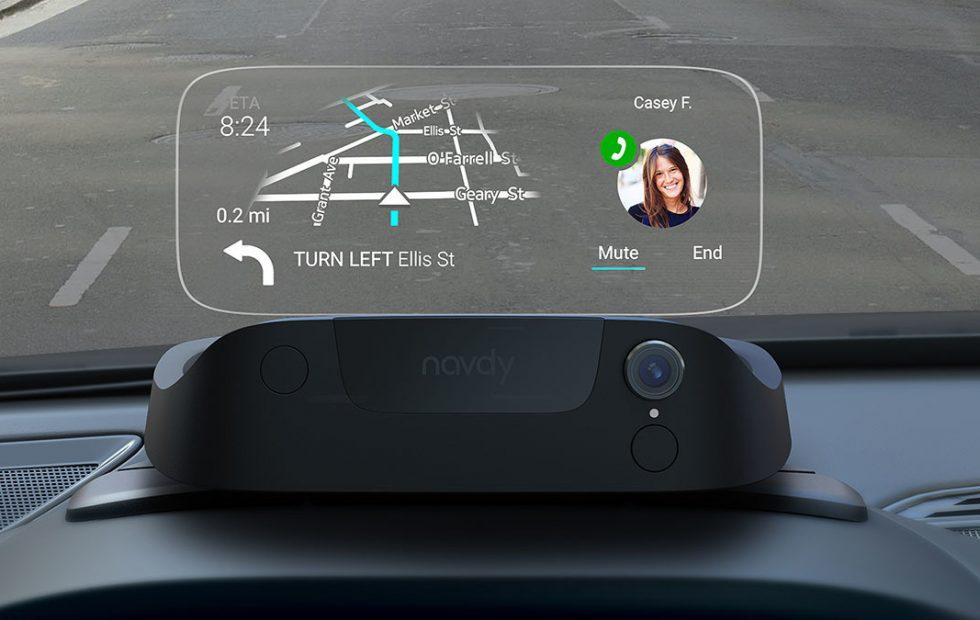
Navdy's idea was to make a compact transparent HUD that would display GPS navigation directly in front of the driver. The device would replace the need to look at the phone and help you focus on the road. Navdy also made an app that you could link up with the main display to get additional information on the HUD. Built-in heads-up displays were existent in some cars, although in the luxurious models, Navdy wanted to bring them to the mainstream cars as well. However, they didn't sell well as the initial price was $799, which was later dropped to $499. But even with the price drop it was too expensive for the average consumer. In addition, Navdy's HUD received harsh feedback. Customers complained that the HUD obstructed the vision, becoming the problem it wanted to solve. The biggest reason this company failed was the implementation of their own navigational system. Navdy didn't thought the costs of maintaining the service would be so high and this led to their shut down in 2018.

14. Data Security: Technology, Training and Rules

 Cybersecurity is always being improved and so are the ways to bypass it. But there is one vulnerability that is still being commonly used f...